
Engineer · Founder · London

Giulio
Pezzulli.

Engineering, with a founder’s perspective.

I’m the person behind Voltaire Labs. I build software, work through difficult problems, and help ideas become things people can use.

Currently a Principal Software Engineer at DFNS.

I’m not currently accepting client work.

Giulio Pezzulli
Mathematics → software → startups

The work so far

From explaining a line of maths
to understanding a whole business.

My work has taken me through education, payments, digital assets and early-stage companies. I’ve written the code, hired the team, questioned the business model and worked with founders to decide what to build next. Here’s how those experiences fit together.

01

— present

London

Principal Software Engineer

DFNS

I’m a Principal Software Engineer at DFNS, a company providing digital-asset wallet infrastructure for financial institutions and businesses.

DFNS’s public brand image: Core Banking for Onchain Finance
Official DFNS company imagery.
About DFNS
02

—

London · client engagements

Founder · On-demand CTO

Voltaire Labs

A small consultancy. A broad education in building companies.

I founded Voltaire to work directly with people building businesses. Sometimes they needed a hands-on CTO to sort out the infrastructure. Sometimes an idea needed its first working product. In other engagements, the hardest question was whether a technology or business was worth backing.

I moved between engineering, hiring, product decisions and commercial work as each situation required. The following were client engagements through Voltaire.

Fractional CTO · London

Maxion

Giving the team a platform they could build on.

Maxion is a dating and matchmaking business. When I joined, it lacked a hands-on CTO, and the inherited setup made deploying code, managing the database and investigating failures unnecessarily difficult.

I personally moved the backend and database from EC2 to Railway, with Cloudflare in the delivery setup. I introduced separate staging and production environments, database backups, continuous deployment, searchable logs and consistent alerts. We completed the cutover without downtime and reduced infrastructure costs on a tight budget.

I also interviewed and hired two engineers. Once the immediate technical problems were under control, I helped shape the roadmap and put Mixpanel, PostHog and AppsFlyer in place. We could start asking better questions about how people used the product, which acquisition channels worked, and what to try next.

A current Maxion app screen showing a planned coffee date
Maxion today.
Product image from its current website.

Worked with Node.js · Express · MySQL · AWS · Railway · Cloudflare · Mixpanel · PostHog · AppsFlyer

Visit Maxion
Product development · London

Habbly

Finding the product by building it, day by day.

Habbly began with an informal idea in its founder’s head. We worked closely together to turn it into a learning application, using AI-assisted development to bring a new working iteration into the conversation each day.

The work extended into the content itself: scripts, images, video and voiceovers, and the situations that could make learning enjoyable. We experimented with how these pieces fitted together, listened to feedback and considered how the experience could scale.

I built the initial MVP and helped hand delivery over to a continuing team. The product has evolved since that engagement; today Habbly focuses on language homework for schools.

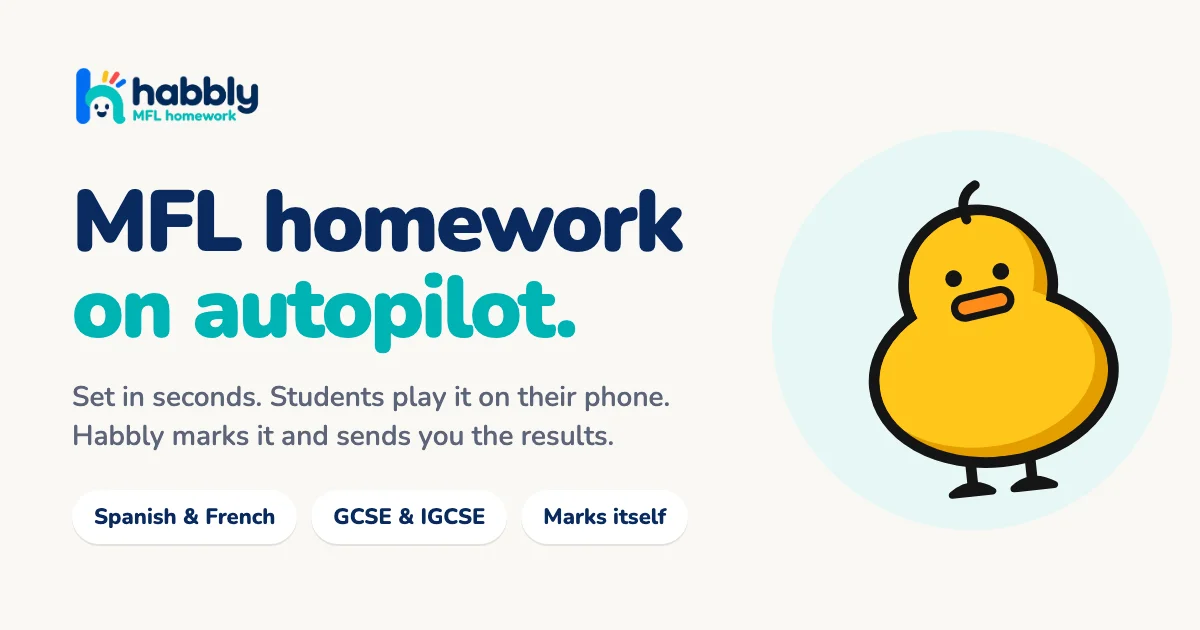
Habbly’s current language-learning identity, with a yellow duck and Spanish and French homework
Habbly’s current product. My work covered the initial application and technical handover.

Worked with React Native · Expo · NestJS · PostgreSQL · Gemini Video · ElevenLabs · LLM APIs

Visit Habbly

Principal Analyst · Madrid

Nextblock

Taking an engineer’s questions into venture capital.

During a six-month engagement with Nextblock, I assessed crypto companies and technologies from both a technical and an investment perspective. The work covered the Bitcoin ecosystem and mining, tokens, new DeFi primitives, privacy-focused chains, prediction markets, stablecoins and Bitcoin treasury businesses.

I spoke with founders, attended conferences and investigated the assumptions behind proposals. I was interested in what a design meant for someone actually using it: who held custody, what happened if a user failed to act, which third parties they had to trust, and whether the commercial model held together.

It was a chance to combine detailed technical reading with conversations on the ground, and to bring both back into the investment discussion.

Focus Technical due diligence · Founder conversations · Protocol trade-offs · Commercial assessment

Product & growth · London

NeuroTracker

Building the path from discovering a product to becoming a customer.

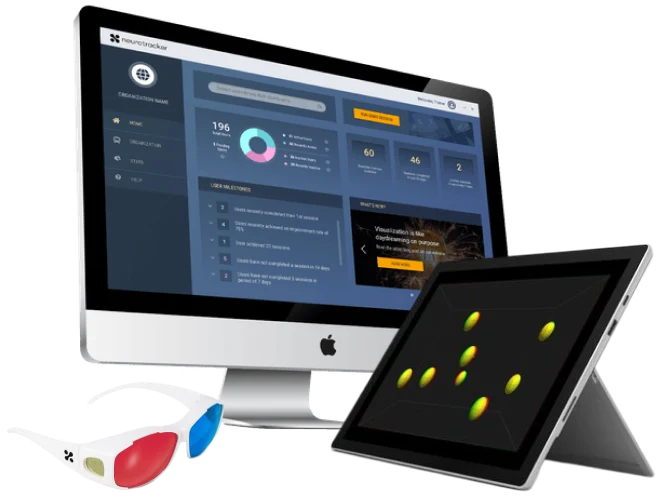
NeuroTracker is a cognitive-training product built around tracking moving objects in a three-dimensional scene. My engagement brought together technical delivery and the commercial work needed to develop its consumer business.

I rebuilt marketing pages and sales funnels, worked on branding, and developed affiliate widgets and conversion tooling. I also took a leading role in campaigns spanning social content and SEO. The work helped establish a B2C revenue pipeline where one had not existed when I began.

That meant thinking about the whole journey: how someone first encountered NeuroTracker, how we explained it, and what happened between their initial interest and purchase.

NeuroTracker’s training scene and dashboard on desktop and tablet
NeuroTracker product imagery.
Visit NeuroTracker
03

—

London

Principal Software Engineer

Caduceus

A team, a bridge, and a new technical domain.

I built a team and delivered a blockchain bridge using Multichain V2 contracts, alongside its frontend and liquidity operations. I learned Solidity and used Hardhat to deploy the contracts, working across the application and the infrastructure it depended on.

The bridge went live, although it did not achieve substantial adoption. The experience gave me a practical understanding of delivering across smart contracts, wallet interfaces and the operational side of a blockchain product.

Worked with Solidity · Hardhat · React · Vue · Ethers.js · WalletConnect · Web3Auth · Multichain V2

04

—

London

Software Engineer

Circle

Card authentication within an event-driven payments system.

At Circle, I was responsible for implementing 3D Secure end to end in the card-payment acceptance flow. This meant integrating the authentication protocol into the existing event-driven payment process, so cardholder authentication became part of the wider transaction flow.

The role also involved payment integrations across cards and banking rails, including ACH, wire transfers and SEPA. It deepened my experience of building software that connects financial systems and external providers.

Worked with Java 11 · Dropwizard · Docker · AWS · PagerDuty · 3D Secure

Circle’s payments imagery showing people at work with deposit and payment overlays
Current payments imagery from Circle.
About Circle
05

—

London

Software Engineer

Bitpanda Enterprise

Custody business formerly known as Trustology

Understanding a transaction before authorising its signature.

I worked at Trustology, the custody business now part of Bitpanda Enterprise. My most technically demanding project there was a DeFi firewall: a policy layer that used decoded smart-contract calls to constrain which transactions could be signed.

For supported interactions, we could identify the operation and its parameters — for example, a token transfer and its amount — and use that information in signing rules. The work connected transaction decoding with restrictions enforced through the custody platform’s HSM-based signing infrastructure.

I worked on the supporting nodes and infrastructure as well as the application logic. It brought together blockchain mechanics, policy design and the practical requirements of a custody service.

Worked with TypeScript · Node.js · Express · Vue.js · AWS Lambda · DynamoDB · AppSync · API Gateway

Bitpanda Enterprise’s custody product shown on a tablet with portfolio and asset-management views
Current custody product imagery from Bitpanda Enterprise. My role was at Trustology.
06

—

Original co-founder role · London

Revisited in 2026

Co-founder · Mathematics & software

AIMathTutor Live

It started with a question: how do you put the care of a good tutor into software?

After my mathematics degree, I co-founded AITutor with two other graduates. I designed and built its mathematics engine from the ground up, encoding GCSE and A-level question types in JavaScript.

The engine assembled exam-style questions from reusable, parameterised parts. One part could feed into the next, while coefficients, exponents and other inputs changed to produce new examples. Each question came with a worked solution.

The detail I cared about most was the explanation. We wrote the algebra and the tutoring language together, step by step, so a student could understand why a line followed from the one before it. Hand-authoring these functions gave us control over every stage of the solution.

I also built the syllabus map, question tagging, notation-cleaning routines and answer-generation logic. Alongside the engineering came the experience of co-founding a company: developing the MVP, building a team, fundraising and finding customers.

Original stack JavaScript · React · Node.js · Express · PostgreSQL · GraphQL · Apollo

The current project · 2026

Returning to the same question.

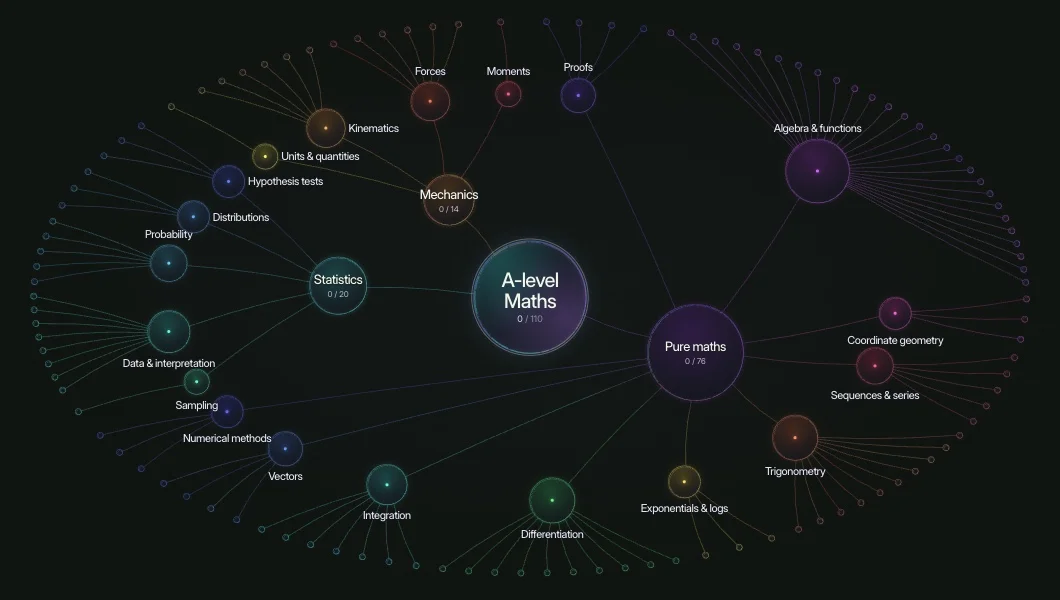
I’m exploring it again through AIMathTutor Live, with AI-assisted learning and a visual syllabus map. The tools have changed; helping someone understand the maths remains the reason to build.

AIMathTutor Live’s syllabus map connecting A-level topics across pure maths, statistics and mechanics
The current AIMathTutor Live syllabus map.
Explore AIMathTutor Live
07

—

Bristol

Education

A foundation in mathematics.

University of Bristol
MSci Mathematics · Upper Second-Class Honours (2:1)

Selected modules

  • Bayesian Modelling
  • Monte Carlo Methods
  • Stochastic Optimisation
  • Graphical Models
  • Multivariate Analysis
  • Advanced Time-Series
  • Numerical Methods
  • Linear Algebra
  • Game Theory
  • Quantum Information Theory
  • Financial Mathematics
  • Advanced Fluid Dynamics

Languages English and Italian — native
Spanish — fluent

Elsewhere & in touch

There’s always
more to understand.

I’m based in London and currently focused on my role at DFNS.
I’m not currently accepting client work.